

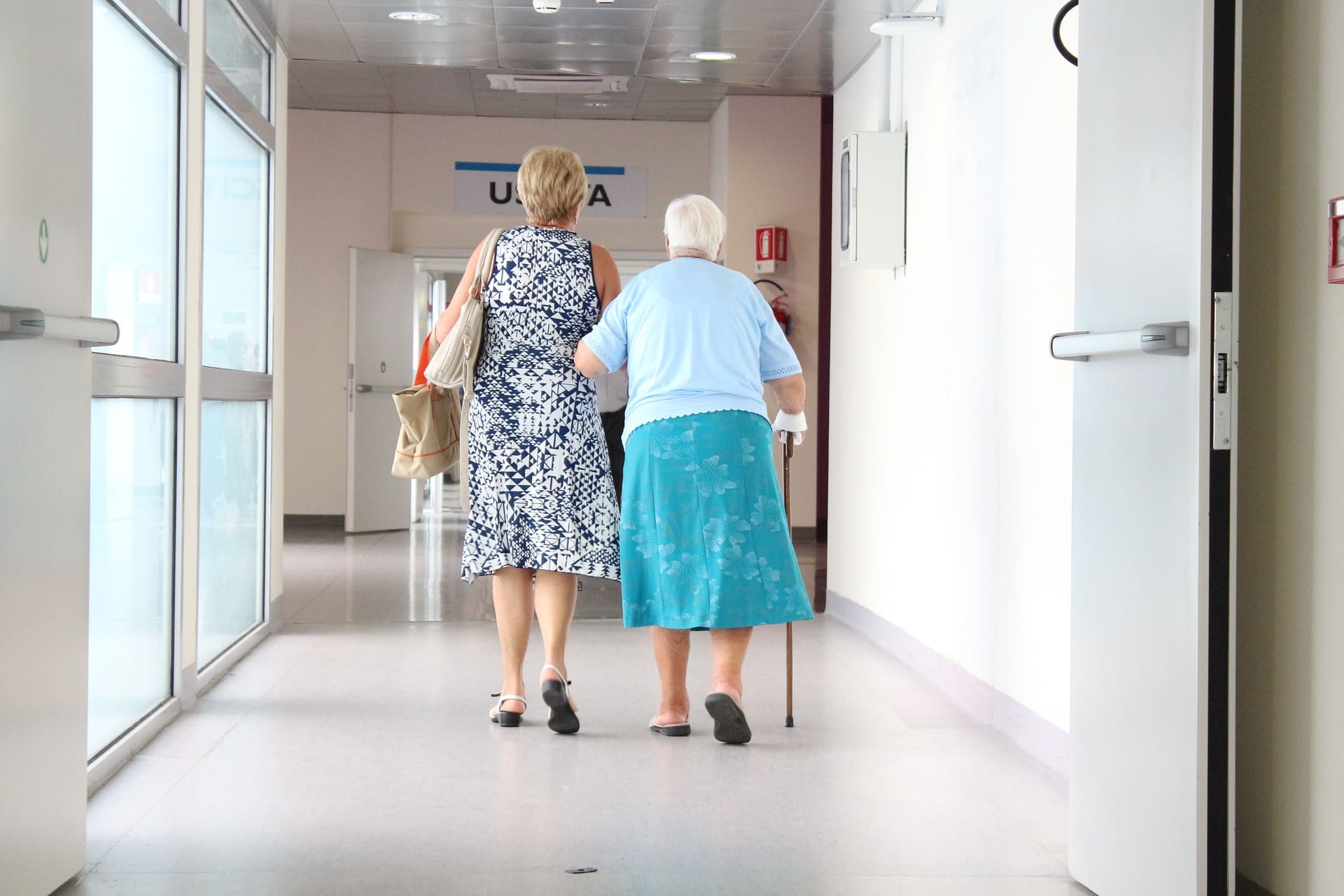
What health checks for older people should you be thinking about?
Health checks for older people help improve quality of life by ensuring doctors can start treating any medical conditions at the earliest possible opportunity.
Health checks for older people help improve quality of life by ensuring doctors can start treating any medical conditions at the earliest possible opportunity.
Here, we’ll introduce you to some of the general checks you should be booking in for regularly to keep your health in the best possible condition.
Important health checks for older people
When it comes to health checks for older people, these are the core selection you should be thinking about:
1. Blood tests
Having a blood test can tell medical professionals a lot about the current state of your health, as well as your risk of:
- Heart disease
- Kidney disease
- Diabetes
- Stroke
While some blood tests involve an intravenous needle, many conditions can now be diagnosed with a simple finger-prick test.
There’s no set schedule for having blood tests. You’re likely to have one every five years or so as part of your NHS Health Check. Aside from that, you can just follow your doctor’s recommendations.
2. Blood pressure tests
About 30% of adults in England have high blood pressure. But, the condition is largely symptomless, so you might not even realise you have it.
Having a blood pressure test can tell you about your risk of:
- Heart disease
- Kidney disease
- Diabetes
- Stroke
The procedure isn’t painful or invasive. It’s simply a matter of wrapping a band around your upper arm, inflating it and taking a reading.
Again, there is no set regimen for blood pressure tests. Your doctor is likely to conduct one whenever you book an appointment, and may ask you to have frequent tests if you’re considered to be at risk.
3. Height/weight measurements
Measuring your height and weight enables doctors to work out your estimated body mass index (BMI).
Doctors often use this test in combination with others to establish your risk of developing a variety of conditions.
However, even on its own, this test can tell you whether you are over or underweight, or at risk of developing diabetes.
Doctors will measure your BMI as part of your NHS Health Check and may choose to do so on other occasions too. You can also conduct this check at home.
4. Cholesterol tests
Cholesterol tests will tell you more about your risk of having a heart attack or stroke.
Your doctor will analyse your cholesterol level using a blood test, potentially as part of your NHS Health Check.
If you’re identified as having high cholesterol, your doctor is likely to recommend you adapt your diet and come in for checks on a more frequent basis.
5. Cancer screening
Certain groups are at greater risk of developing different types of cancer.
You should be receiving regular screenings to catch any tumours early, therefore maximising your chance of recovery.
Checks for the following types of cancer should be conducted every few years (in line with your doctor’s recommendations):
- Bowel
- Breast
- Prostate
- Skin
- Cervical
Your doctor will recommend more regular checks if you have a family history of certain types of cancer.
The type of test you’re given will depend on the type of cancer your doctor is testing for.
How live-in care can help support your loved one’s health
Many older people miss these vital checks as they’re unaware that they’re needed, or because they find it difficult to arrange or attend appointments.
However, with live-in care, your care team can take on these responsibilities on your behalf. Our expert carers are trained in best practice relating to health checks for older people.
Using this knowledge, they will ensure that you never miss a check and have the support you need to attend your appointment.
Learn more about how live-in care can help you keep a close eye on your health by speaking to the friendly team at The Good Care Group.
Discover more
Summer Family Holidays: Who Looks After Mum/Dad?
For many families, the summer holidays are something to look forward to. But if you’re also caring for an ageing parent or loved one, booking a holiday can bring an unexpected feeling of guilt. Questions like “Who will look after...
Read more
Real Family Story: Mum’s Experience of Live-In Care
Choosing the right care for a loved one can be a deeply personal decision. In this heartfelt family testimonial, Carol Kefford, a former nurse, shares her experience of arranging live-in care for her mum with The Good Care Group. Drawing...
Read more
Good Care Month: Meet Eilidh Douglas
As part of Good Care Month, we’re celebrating the incredible people who make exceptional home care possible. This week, we’re introducing Eilidh Douglas, one of our dedicated Care Managers in Scotland. Since joining The Good Care Group in 2021, Eilidh...
Read moreRead why our clients choose us
Awards & accreditations



Talk to us about your care needs
To talk about your care needs, contact one of our friendly advisors.
Calls from landlines are free.