

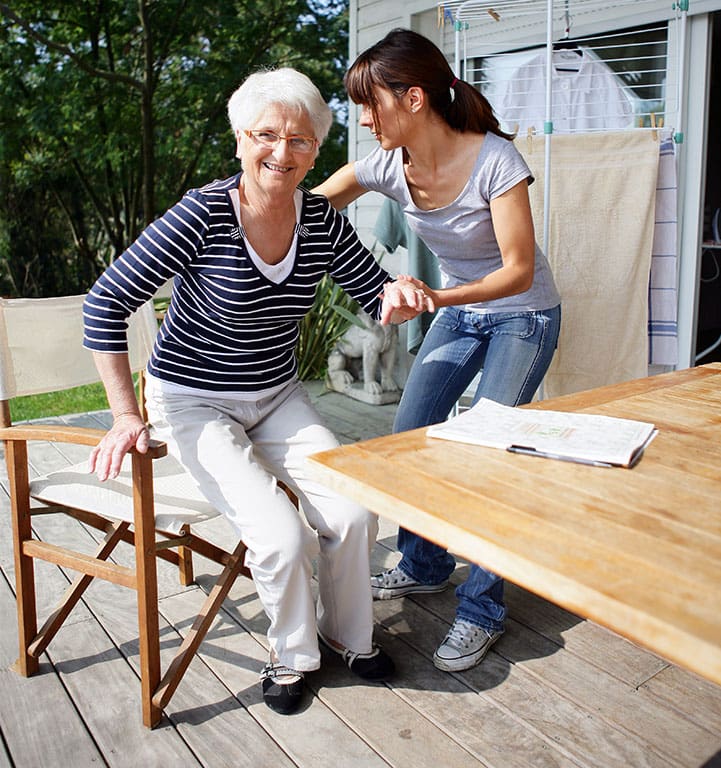
Preventing pressure ulcers
A useful guide for clients, their families and carers on how to notice and treat pressure ulcer’s and how to prevent it.
This guide explains what pressure ulcers are, why they occur, and the actions that can be taken to reduce the chance of pressure ulcers occurring.
What are pressure ulcers?
Also known as bed sores or pressure sores, pressure ulcers are areas of damage to the skin and sometimes also the underlying tissues.
What causes pressure ulcers?
Pressure ulcers are caused by pressure being placed on the skin. They are particularly common over bony areas such as elbows, hips and heels. They happen when a person’s body is in the same position for a long time, where their skin is fragile, moisture builds up, or there is friction applied.
Why is it important to prevent pressure ulcers?
Pressure ulcers can be painful, take a long time to heal and can lead to complications such as infections, amputations, and even death. Pressure ulcers can develop quickly; in a matter of hours in some cases. It is essential therefore to have preventive equipment in place for people who are at risk, and to alert healthcare professionals at the first sign of any skin change.
Signs of skin damage
New red, purple, brown or black areas may be the first sign of a pressure ulcer, but most of the damage is not immediately apparent as it is hidden under the skin. The person may or may not feel discomfort and pain in the affected area. Pressure ulcers vary in level of severity from an area of red skin (called grade 1) to a deep ulcer where there is loss of muscle tissue and even exposed bone (called grade 4).
Who is at risk of developing pressure ulcers?
Anyone can develop a pressure ulcer, but older people, those with restricted movement, and people with certain health conditions such as diabetes and multiple sclerosis (MS) are at particularly high risk.
Preventing pressure ulcers
It is important to check skin daily, especially high risk areas of the body. Keeping as mobile and active as possible will help promote good circulation and relieve pressure.
Staying well-nourished and hydrated is also vital to maintain healthy skin. Incontinence pads should be checked and changed regularly in order to keep skin clean and dry, and harsh soaps should be avoided. ‘Barrier cream’ is sometimes used to protect dry or damp areas from moisture.
The Good Care Group will ask district nurses to perform an assessment where we have identified a person as being at risk. District nurses may recommend the use of certain pieces of equipment such as pressure reliving (foam or air) mattresses and cushions, and it is important that these are used. They may also recommend that carers assist the person in changing their position (turning them) regularly.
It is important that you and the carer communicate any changes in skin to each other so that prompt action can be taken.
Written by Jane Pritchard – Consultant Admiral Nurse for The Good Care Group
If you would like to print a version you can do so by clicking right here.
Further information
For more information about pressure ulcers you can speak to your care manager or visit the following websites.
- National Pressure Ulcer Advisory Panel: http://www.npuap.org/
- National Institute for Health and Care Excellence; Clinical Guideline: https://www.nice.org.uk/guidance/cg179
- NHS Choices: http://www.nhs.uk/Conditions/Pressure-ulcers/Pages/Introduction.aspx
Discover more
Summer Family Holidays: Who Looks After Mum/Dad?
For many families, the summer holidays are something to look forward to. But if you’re also caring for an ageing parent or loved one, booking a holiday can bring an unexpected feeling of guilt. Questions like “Who will look after...
Read more
Real Family Story: Mum’s Experience of Live-In Care
Choosing the right care for a loved one can be a deeply personal decision. In this heartfelt family testimonial, Carol Kefford, a former nurse, shares her experience of arranging live-in care for her mum with The Good Care Group. Drawing...
Read more
Good Care Month: Meet Eilidh Douglas
As part of Good Care Month, we’re celebrating the incredible people who make exceptional home care possible. This week, we’re introducing Eilidh Douglas, one of our dedicated Care Managers in Scotland. Since joining The Good Care Group in 2021, Eilidh...
Read moreRead why our clients choose us
Awards & accreditations



Talk to us about your care needs
To talk about your care needs, contact one of our friendly advisors.
Calls from landlines are free.