
Using technology to communicate with older people
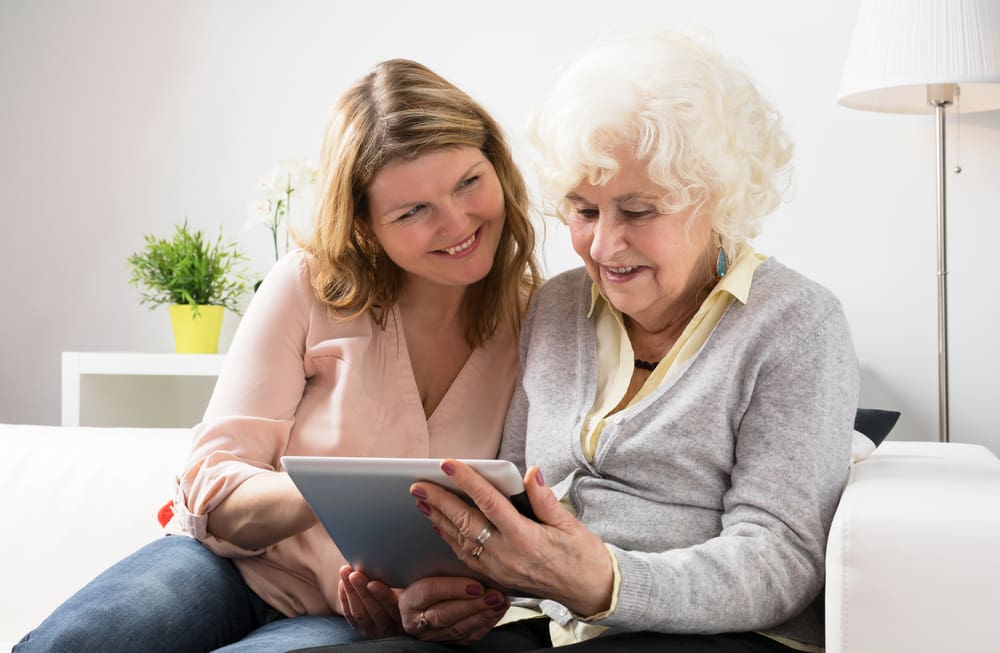
Using technology to communicate with older people can be immensely beneficial. This blog will tell you all about the pros/cons and how to get started.
Using technology to communicate with older people has never been more important.
Of course, these new techniques can never replace the sheer joy of conversing with your loved one in person.
However, with loneliness on the rise among older people and families spread increasingly further apart, communications technology – such as video calling/instant messaging for desktop or mobile devices – can act as a useful stopgap when meeting up just isn’t possible.
Today, we’ll discuss the pros and cons of using technology to communicate with older people. Then, we’ll give you some helpful tips that could help your loved one adapt to these new methods.
What are the pros and cons of using technology to communicate with older people?
Using technology to communicate with older people isn’t without its pitfalls. But, with so much to be gained, the benefits undoubtedly outweigh the costs:
Pros:
With communications technology, you can:
- Help stave off loneliness by devising convenient ways to get in touch more regularly
- Enrich your loved one’s life by involving them in those everyday magical moments – e.g. getting to know the grandkids and staying in touch with daily life
- Gain peace of mind for you and your family that your loved one is safe and happy
- Adjust settings to make communicating easier for people with visual or hearing impairments
- Find equipment especially designed for ease of use by older people
Cons:
However, you should also be aware that you may:
- Need to help your loved one select suitable devices and set up a decent Wi-Fi connection
- Face some upfront costs to invest in the right technology
- Find it challenging to explain how and when to use each device or app
How to help older people use communications technology with confidence
In order to help your loved one get the most out of communications technology, make sure you:
- Explain its importance: Say why you think staying in regular contact is important, how this technology helps and how you intend to use it in order to help them understand its value over more traditional methods of communication.
- Provide clear instructions: Give detailed, logical instructions for the device itself and relevant apps. Make sure you cover everything from turning on the device through to making contact. Avoid any technical jargon or assumptions about what they already know.
- Demonstrate its usage: Instructions are useful long-term, but showing is always more effective than telling. Walk your loved one through the steps they need to take while you’re with them; let them ask questions and explore the technology for themselves.
- Set up the device: Change the settings for ease of use (e.g. increase font size) and download a limited number of relevant apps to form the basis of your communications, such as FaceTime, Skype and WhatsApp.
Using technology to communicate with older people can make an enormous difference to their lives. Keep these points in mind to make the process of adopting this technology as straightforward as possible.
Help your loved one stay socially engaged and spend quality time with friends or family by calling on the friendly team at The Good Care Group.
Discover more
Summer Family Holidays: Who Looks After Mum/Dad?
For many families, the summer holidays are something to look forward to. But if you’re also caring for an ageing parent or loved one, booking a holiday can bring an unexpected feeling of guilt. Questions like “Who will look after...
Read more
Real Family Story: Mum’s Experience of Live-In Care
Choosing the right care for a loved one can be a deeply personal decision. In this heartfelt family testimonial, Carol Kefford, a former nurse, shares her experience of arranging live-in care for her mum with The Good Care Group. Drawing...
Read more
Good Care Month: Meet Eilidh Douglas
As part of Good Care Month, we’re celebrating the incredible people who make exceptional home care possible. This week, we’re introducing Eilidh Douglas, one of our dedicated Care Managers in Scotland. Since joining The Good Care Group in 2021, Eilidh...
Read moreRead why our clients choose us
Awards & accreditations



Talk to us about your care needs
To talk about your care needs, contact one of our friendly advisors.
Calls from landlines are free.